Flock health at parent stock farm: a critical point for success
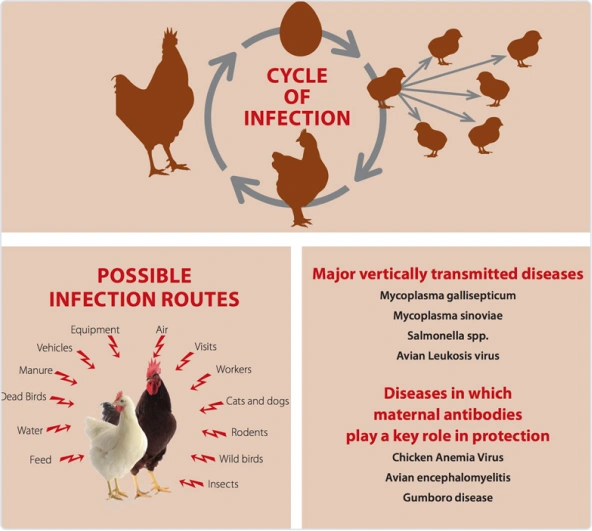
In the egg industry, numerous diseases are vertically transmitted, this means from breeders to their progeny. That is why without a strict sanitary control at the selection and reproduction level it is not possible to control these diseases in commercial layer. This will avoid the birds express their maximum genetic potential.
The control strategy should always be to keep the flocks free of these diseases and monitor that their status remains so over time. If the birds are infected by vertical transmitted diseases, antibiotic use or other treatments can help to recover the productivity of the birds, but in no case, will ensure the non-transmission of these diseases to the progeny.
That is why these strategies are wrong and should be not implemented. In the other hand, layer breeder should transmit maternal antibodies to the day-old chick for conferring protection against certain diseases. Otherwise the chick will suffer from these diseases if they are challenged by during the first days of life. That is why it is so important to adapt the vaccines program for assuring that these antibodies are developed by breeder.
Biosecurity program
A biosecurity program plays a key role in maintaining hens in good health and, therefore, profitable production. Biosecurity can be defined as all the procedures put in place to prevent pathogens infecting hens and spreading to other poultry farms. To be effective, a biosecurity program should be implemented in a very practical and structured way. An effective biosecurity program is well-adapted to the production structures and well-understood by all the actors (staff, production managers, external suppliers, veterinarians, general manager etc.) at the farm.
If certain actors do not take biosecurity seriously and fail to follow the procedures, the efforts of the others will not be rewarded. It is essential to apply procedures systematically. Sporadic application of a biosecurity program will not work.
Biosecurity types
Conceptual biosecurity
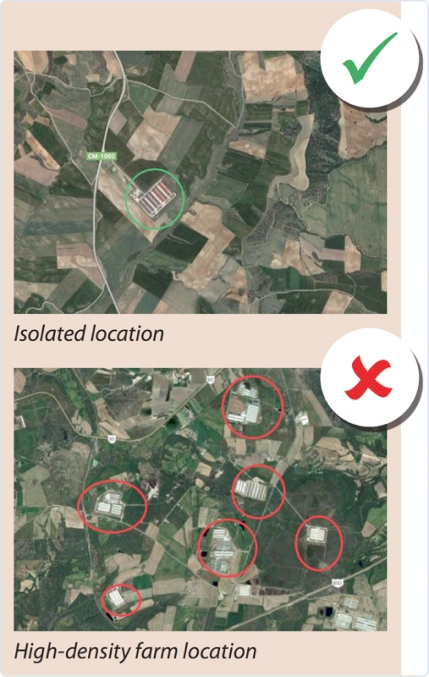
This is the biosecurity related to the farm design and its location of the farm and its surroundings.
Ideally farms should be situated away from:
- other poultry farms (including backyard farms)
- other farms (other species)
- Live bird markets
- Hatcheries
- Slaughterhouses
Structural biosecurity
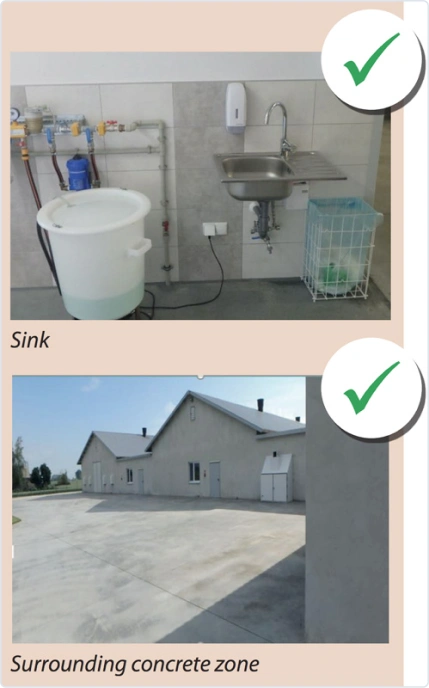
This is the biosecurity related to the physical structures used at the farm to prevent the introduction or spread of diseases.
Important components include:
- Perimeter fences
- Surrounding buffer zone
- Bird-proof elements
- Entrance doors
- Disinfectant system in entrance door
- Shower or black/white room
- Booth baths
- Work clothing and footwear
- Feed storehouse or silos
- Dead bird disposal
Operational biosecurity
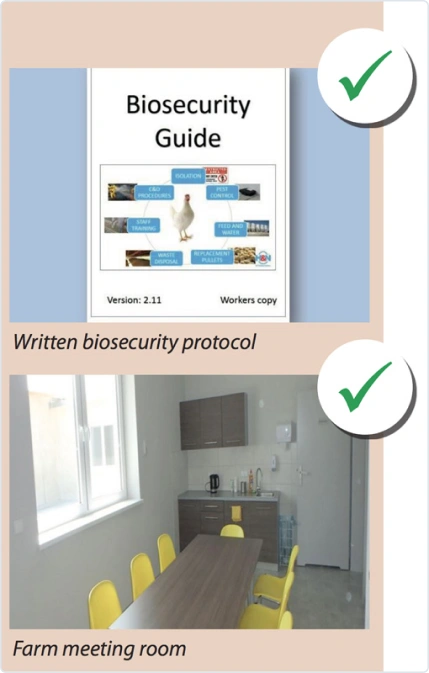
Biosecurity program in seven steps
Biosecurity program – step 1
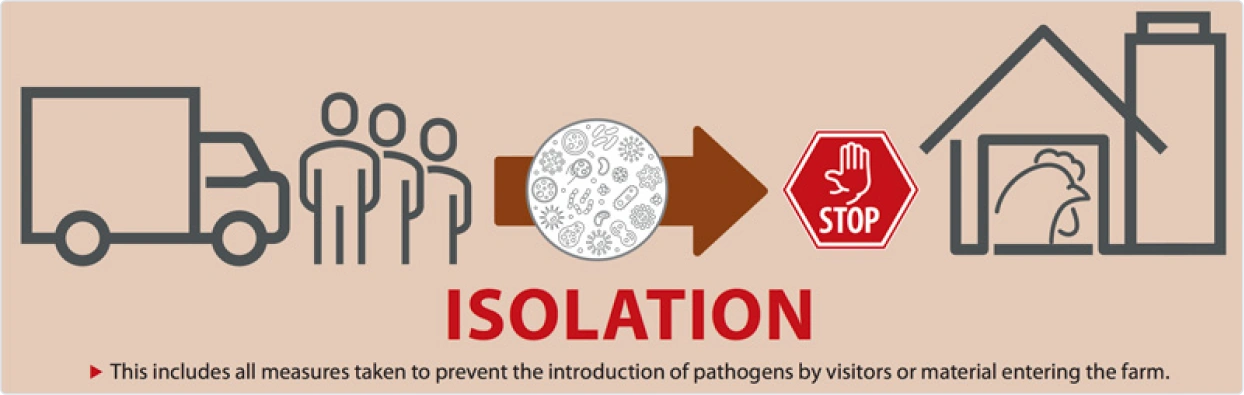
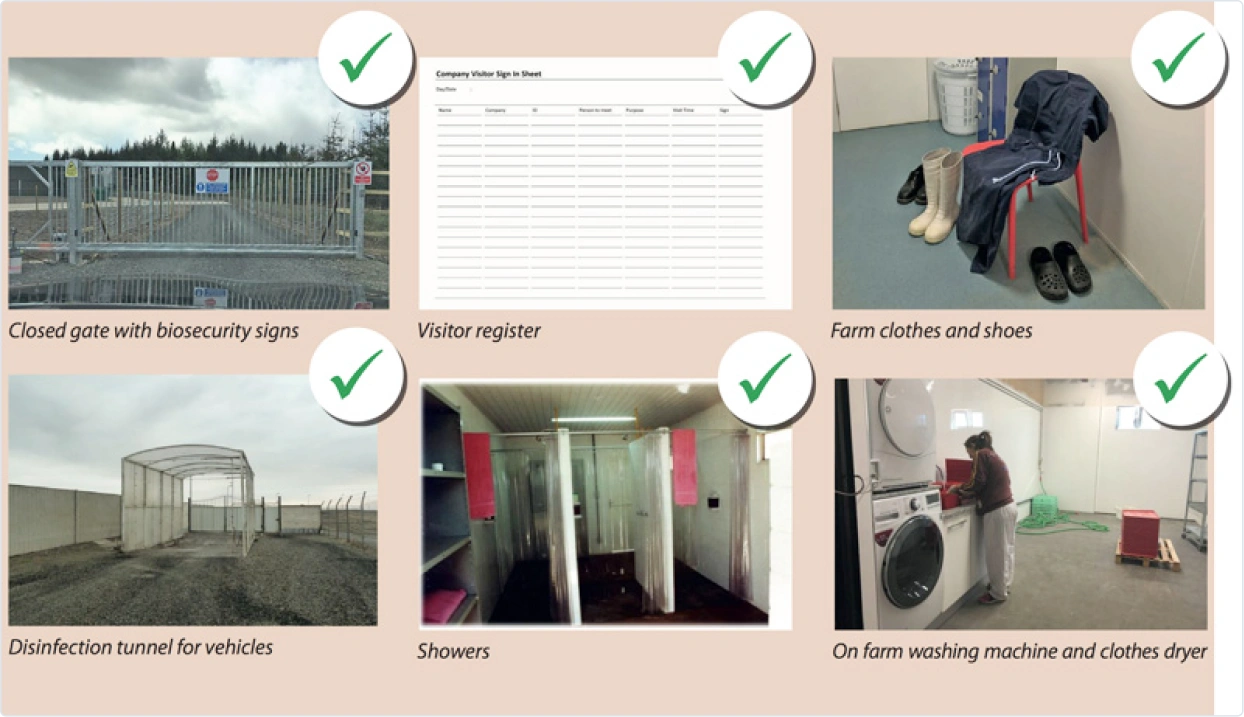
Some basic rules:
Visit restriction
Visitor policy
Work clothing
Material /equipment disinfection
Visitor register
Shower
Vehicle disinfection
Biosecurity program – step 2
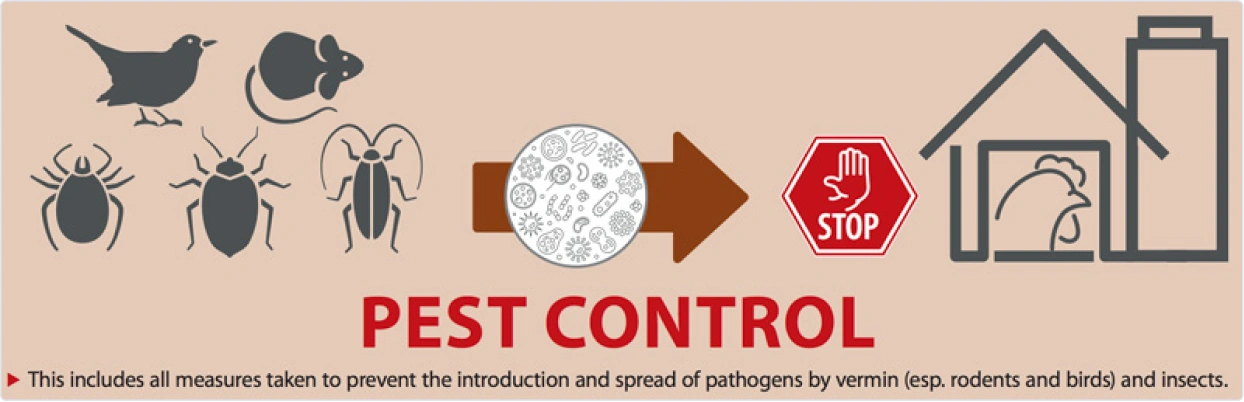
Some basic rules:
Active measures:
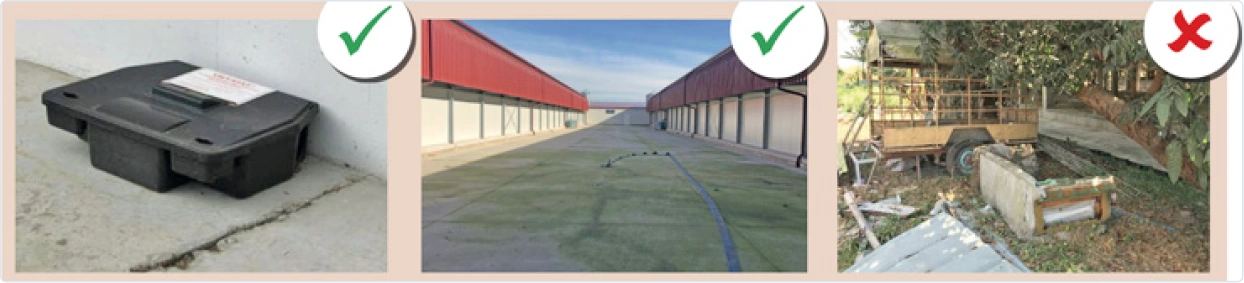
- Install bait stations.
- Have an active Rodent Control Program.
Rodents
Insects and other
Passive measures:
- Keep the perimeter around the house free of grass and other organic material.
- Maintain integrity of walls.
- Keep feed free of rodents.
- Remove any spilled feed.
Birds
Biosecurity program – step 3
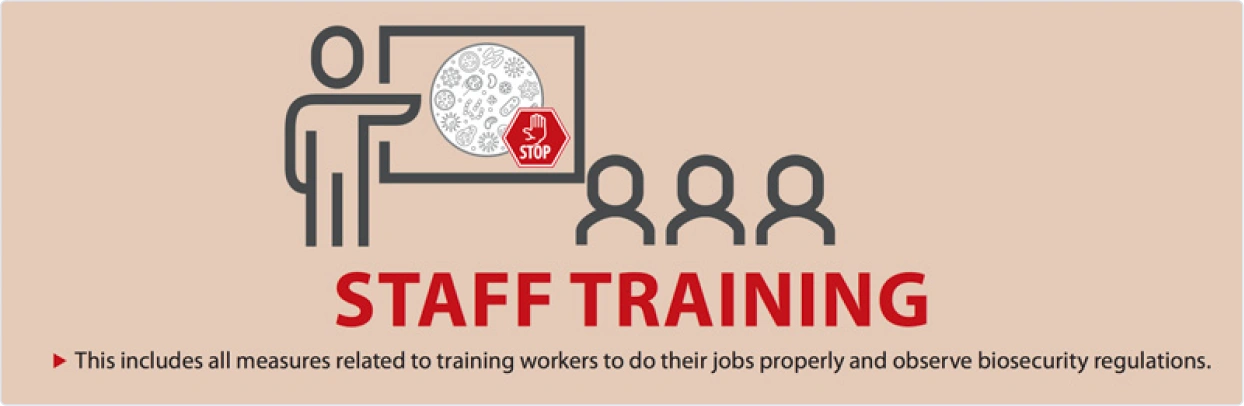
Information, meetings and training days should be provided to staff and other people working on the farm to ensure that they understand, respect and collaborate in the biosecurity program. It is also very important to ensure staff do not raise poultry at home or come into contact with other birds (pigeons, hawks, ducks, …).
Biosecurity program – step 4
The ambient temperature has a great influence on egg production.
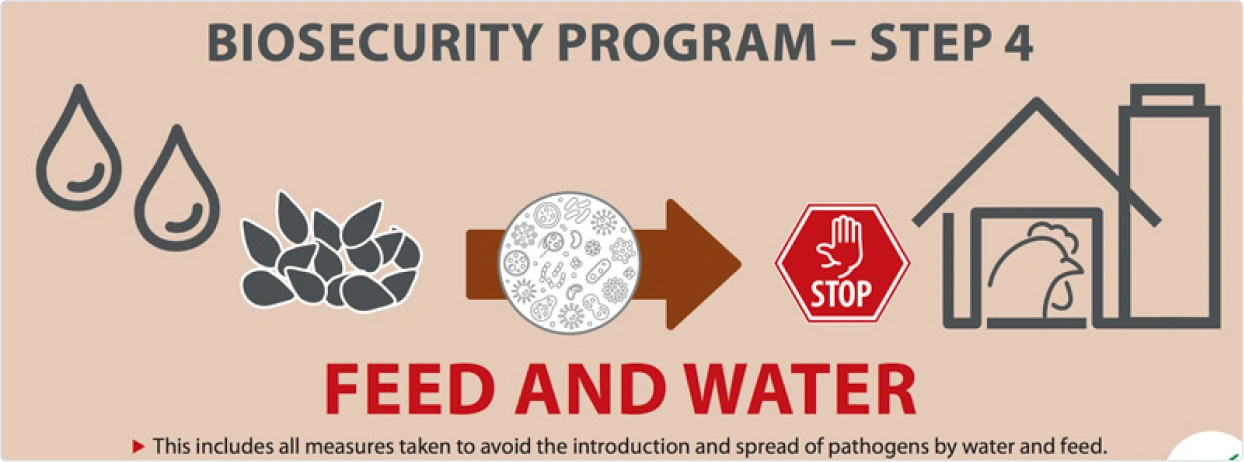
Feed
Water
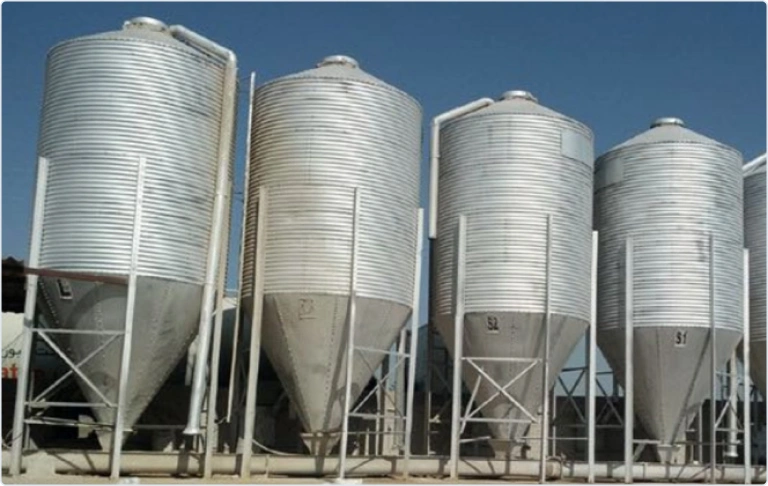
Biosecurity program – step 5
Waste removal and disposal is critical because waste material can be heavily contaminated.
Manure
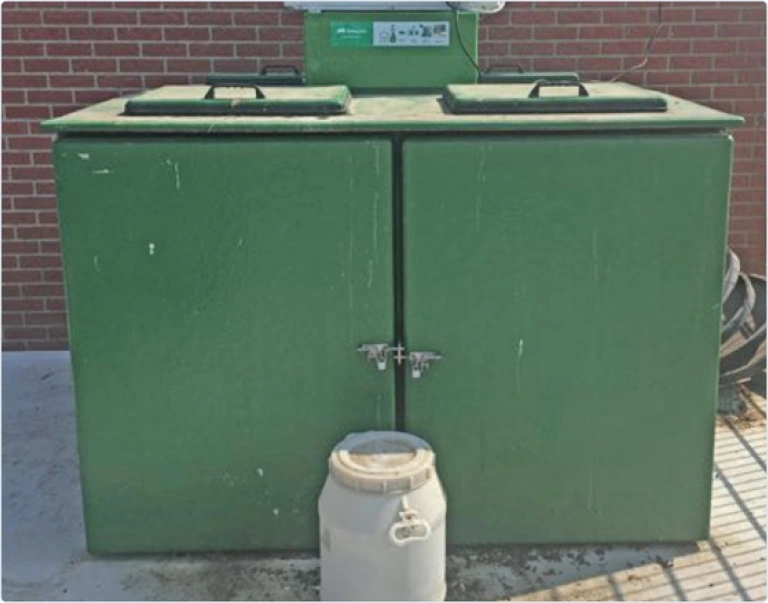
Dead birds
Dead birds should be removed from houses on a daily basis and stored away from the poutry houses. Different methods are available to destroy the dead birds hygienically. If dead birds are moved from the farm, take extreme care during transport:
- Never permit transport of dead birds to enter the farm.
- Only permit dead birds to be collected outside the farm.
- Live bird markets
- Hatcheries
- Never have personal contact with people handling dead birds.
Biosecurity program – step 6
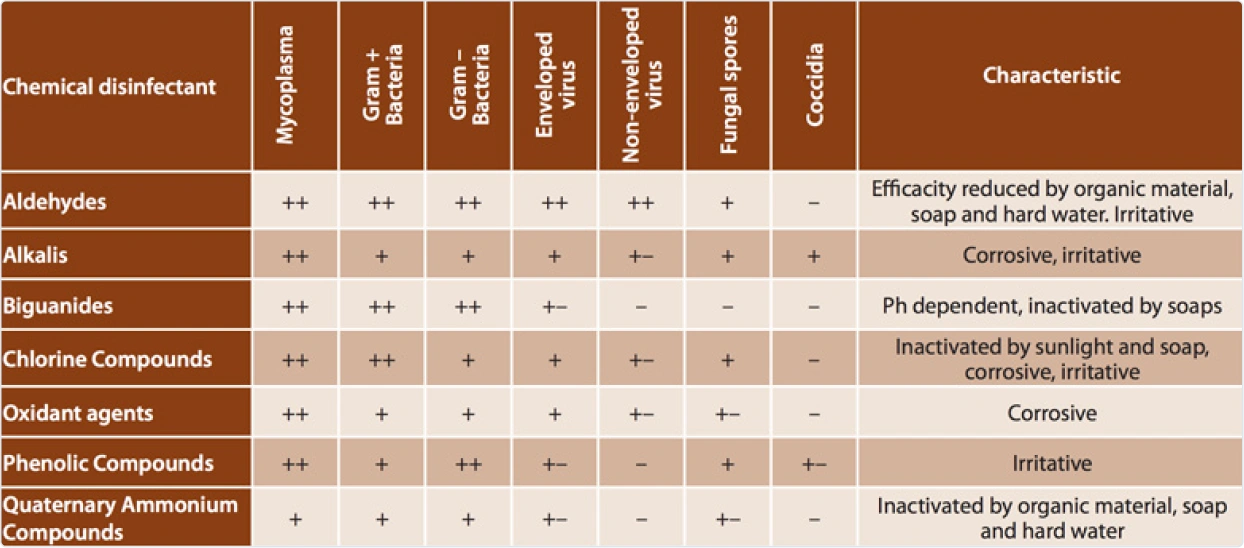
Biosecurity program – step 7
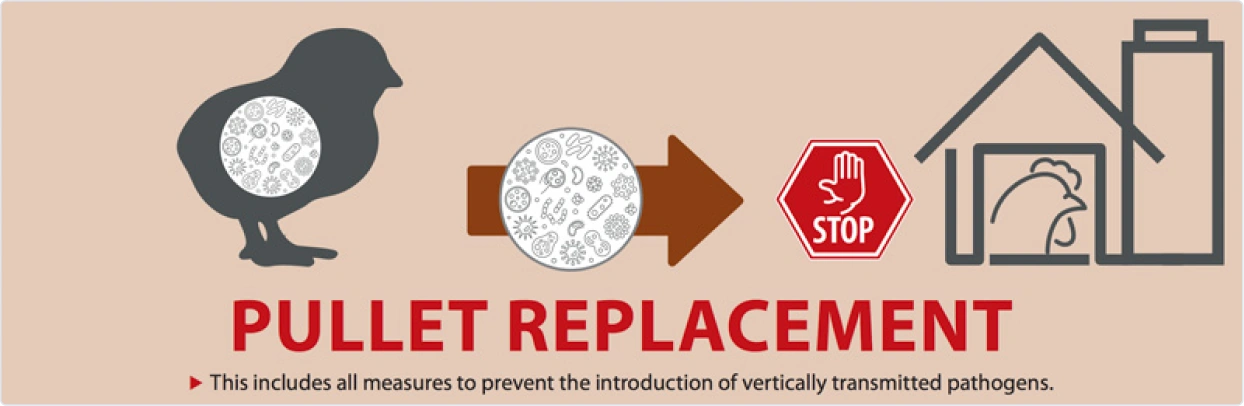
Vaccination programs
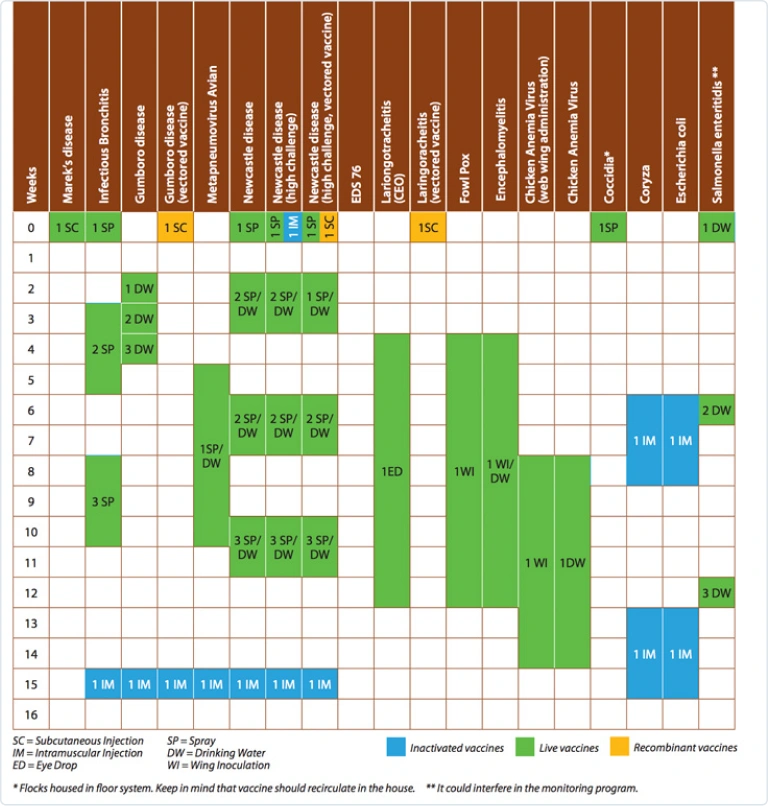
Specific recommendations for individual farms are not possible, but the sample vaccination program (table 26) is intended as a very general guideline for vaccinations which are needed on most farms worldwide.
Additional vaccinations for coccidiosis, Escherichia coli, Avian Influenza and the variant strains of other disease-causing agents may also be needed. These decisions, however, need to be made on a farm-by-farm basis after careful consideration of the risk factors involved which include, but are not limited to: previous exposure, geographic location, vaccination and exposure of neighboring flocks, state regulations and endemic disease-causing factors.
Ask for an adapted vaccine program from your local veterinarian.
Administering vaccines in practice
To avoid errors, check and audit these procedures regularly. Proper vaccination is essential for a good health status!
1) Transport and storage
- Only accept vaccine in good condition.
- Preserve the cold chain at all times.
- Never freeze vaccine.
- Never expose to sunlight.
- Store vaccine correctly and check it regularly
2) Reconstitution
- Follow manufacturer’s instructions carefully when administering.
- Avoid contact with disinfectants during the reconstitution process.
- Use the vaccine immediately after.
3) Administering
- Use the appropriate technique to administer each vaccine.
- Vaccinate only healthy chickens.
- Do not dilute or “cut” the vaccine
- Avoid contact with disinfectant when administering vaccine.
- Avoid using medication and antibiotics for three days preceding and one week after live bacteria vaccination.
Mass administration
Drinking water
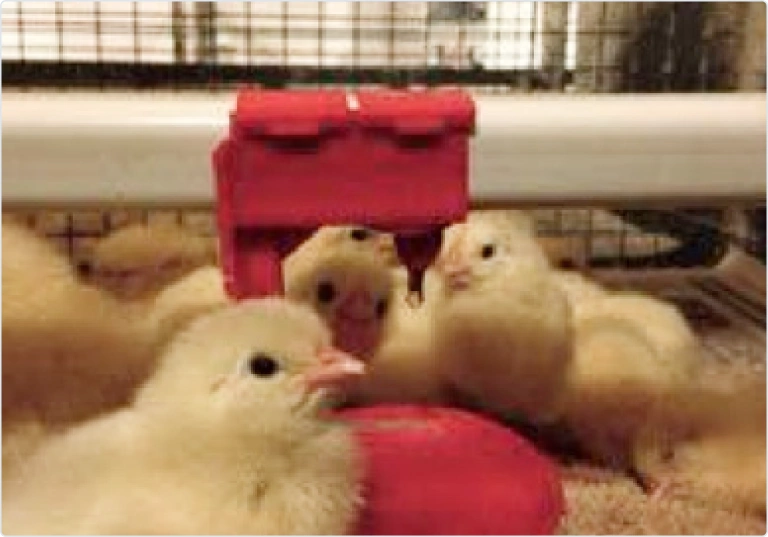
- Most common vaccination technique.
- Assure the absence of chlorine or other disinfectant in the drinking water
- A previous water privation can assure that all birds are thirsty.
- Use dye in the drinking water for monitoring water consumption
- Assure that water is consumed within 2 hours.
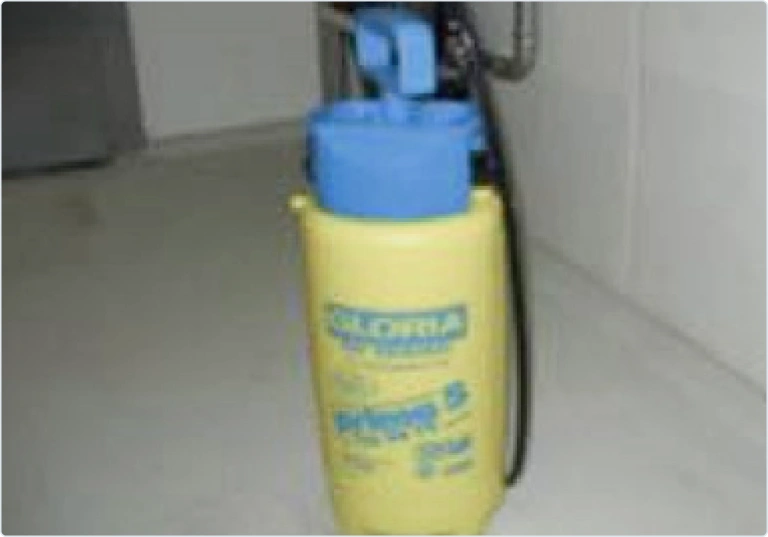
Spray
- Used for respiratory disease vaccination.
- Assure the absence of chlorine or other disinfectant in the sprayed water
- Droplet size plays a key role in the vaccine reactions and immune response
- Distribute vaccine homogeneously among the birds.
- Avoid drafts during the vaccine administration.
Individual administration
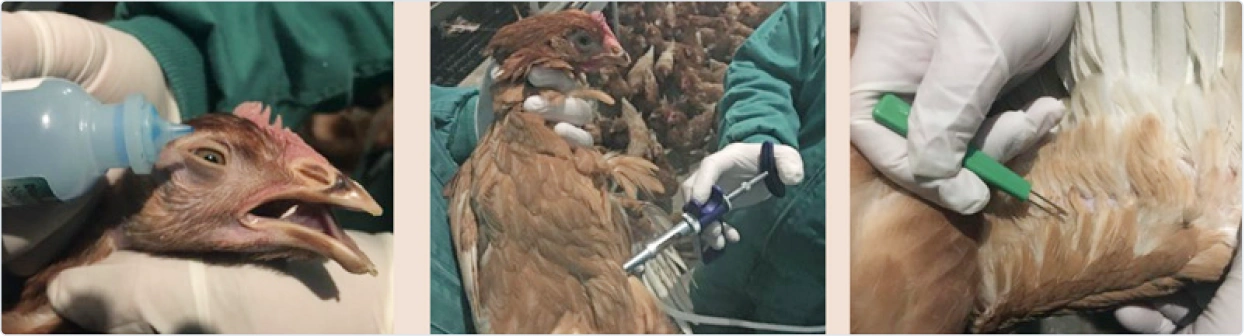
Eye drop
- Used for respiratory disease vaccination.
- Use dye in order to assess the efficiency of instillation.
- Trained and committed crew and a well organised program of work is essential.
- Ensure all chick’s are vaccinated.
Injection
- Used for respiratory disease vaccination.
- Use dye in order to assess the efficiency of instillation.
- Trained and committed crew and a well organised program of work is essential.
- Ensure all chick’s are vaccinated.
Wing inoculation
- Used mostly for Pox vaccination.
- Assure that needle is in contact with the vaccine before you inoculate every individual bird.
- Trained and committed crew and a well organised program of work is essential.
- Check vaccine reaction
- Check vaccine reaction 7 days after administering it in the case of Pox vaccine. More than 90 % of chicks should be positive.
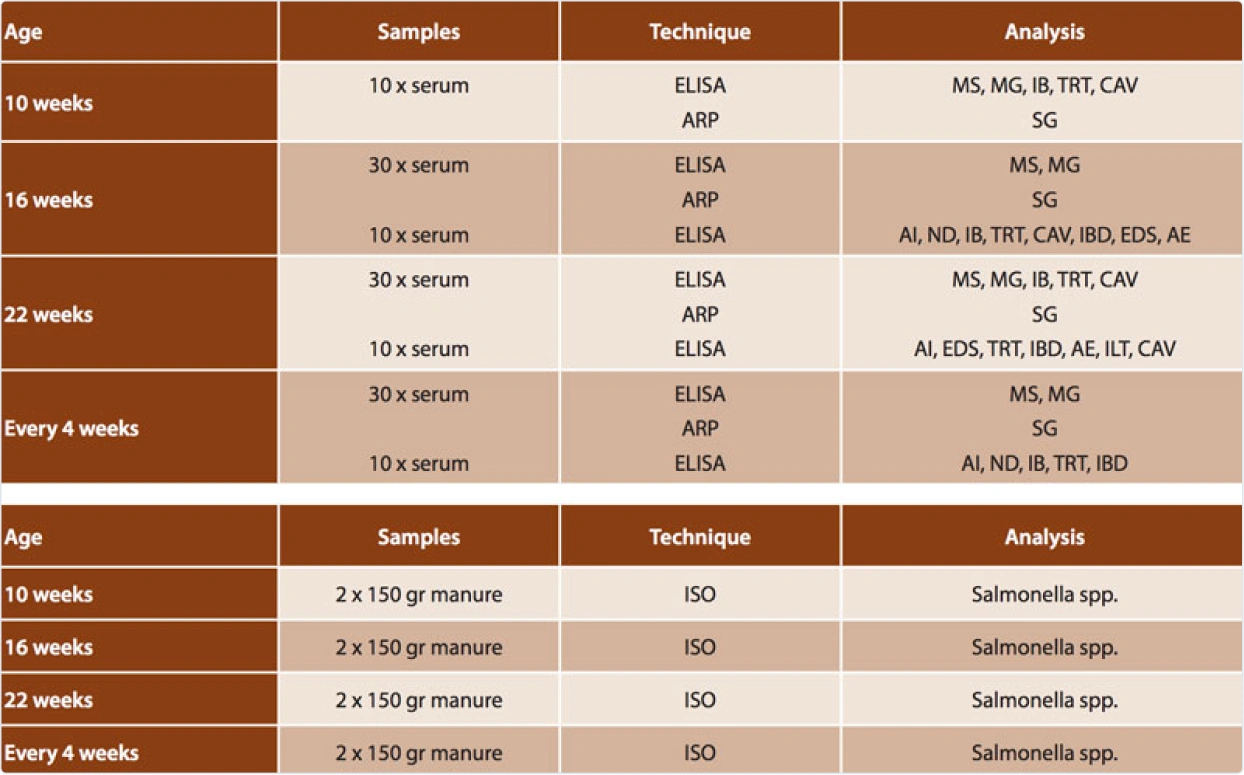
Monitoring program
Monitoring programs in breeder is essential to produce high quality day-old chicks. This is because it is the only way to test and verify that the breeding lots are free of vertical transmission diseases. On the other hand, it is necessary to verify that the vaccination programs have been applied correctly and the lot will be protected against productive problems in case of disease challenge.
It is necessary to work in an orderly systematic and organized manner to the full advantages of this program. First of all, it is necessary to have access to a veterinary laboratory that reliably runs the demanded analyzes. Secondly, laboratory results should be read and filed on time by a responsible veterinarian. In case of nonconformities the adequate corrective measures must be taken.
Given the weighty and pressing of these, it is highly recommended to have a contingency plan pre-agreed with the owners of the bird breeders. In many countries, these monitoring programs must conform to the legislation of the country
Key points
- Health is vital to achieve the birds’ full genetic potential. Act before diseases become a limiting factor for your performance!
- Implement a real biosecurity program, not a paper biosecurity program.
- Adapt the vaccine program to your epidemiological situation.
- Administer vaccines according to the instructions. No vaccine program will work if vaccines are administered incorrectly.
- Monitor flock serology to indicate the effectiveness of your vaccination program.
- Monitor flock serology to check that is free of vertical transmitted diseases.
- When weekly mortality exceeds 0.1 % / week perform necropsies.
Breeding scheme
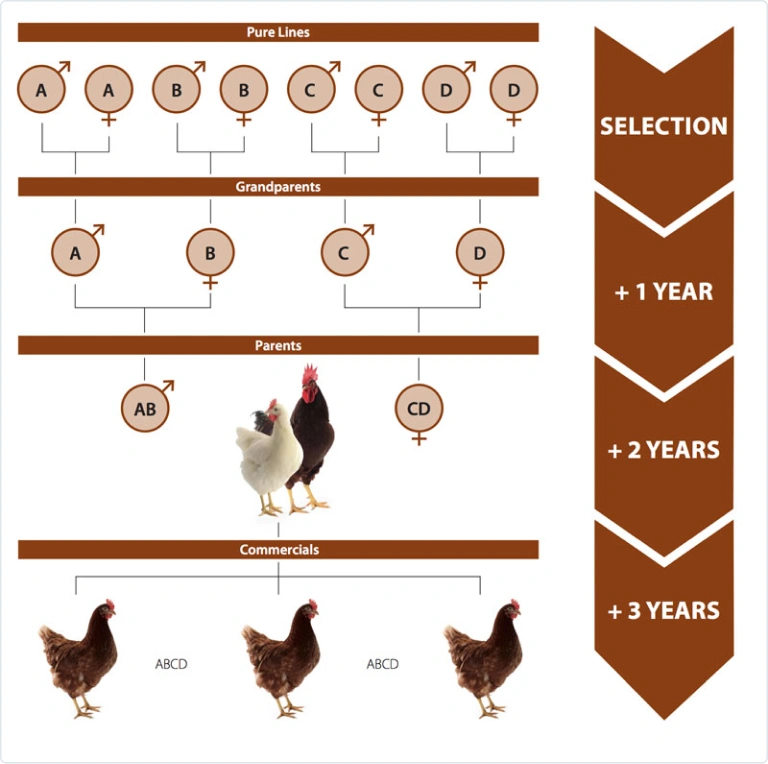
These crosses have been extensively tested and proven to have the best combinability and hybrid vigour to deliver the optimum results at the parent as well as the commercial layer level. It is important that these crosses are done as planned and the right bird is used in the right position. That’s why is important that sexing errors are detected and sorted out as fast as possible. Several field tests with pedigreed birds are carried out under commercial conditions in different locations worldwide. These data is used to select birds that not only shows a great performance under optimal conditions in the breeding farm but also under commercial conditions, and selecting resilient birds that can cope with different challenges like variable and poor feed quality, hot climate and areas with high disease pressure.
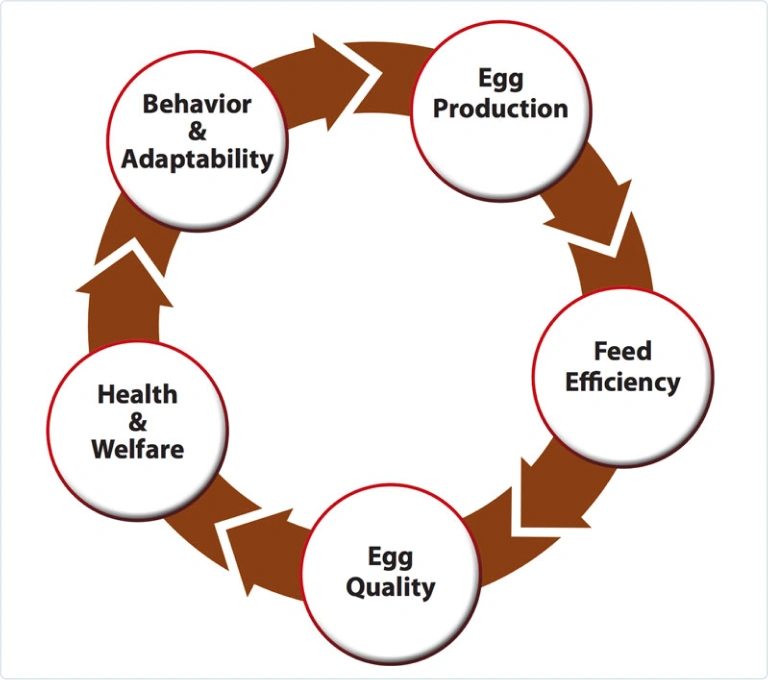
Breeding goals have become more comprehensive including traits such as egg production, reproduction traits, feed efficiency, egg quality traits but additionally these have been complemented in the last decades with other traits related with animal welfare, animal behavior and suitability of birds to cage-free housing systems.
Comprehensive breeding goals – Focus in wide-spread group of traits
Key points
The increased genetic potentials need to be “translated” into reality in commercial practice. Disease control, farm management and nutrition have to keep pace with genetic improvement.