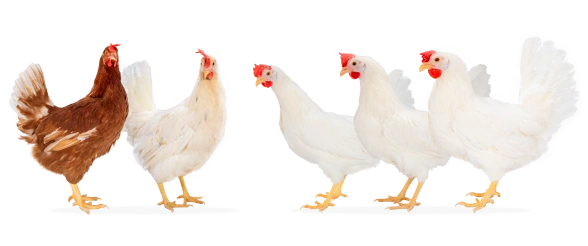
Preparing the breeding flock to move to the laying house
We recommend transferring the birds between 16 and 18 weeks and once the vaccination program has been completed (at least one week after last killed vaccine). The birds should have time to become familiar with the new environment before they start to lay.
If the feed and water systems used in the rearing and the laying house are similar it will help the birds make a smooth transition. The same light program as in the rearing house should be applied. Good communication and coordination between the rearing and the laying house is necessary to synchronize flock management.
It is good management practice to visit the pullets several times during the rearing period. Complete the vaccination program before transfer. When possible do not administer vaccines during the transport of catching processes.

Stocking density in the laying house
The bird should have enough space, especially in hot climates. Important is not only cm² of cage floor/bird, but also the height of the cage and how many cm of feeder and how many drinkers are available per bird (a minimal recommendation is given in Table 1).
Keep in mind that overstocking has a strong impact on mortality, body weight and uniformity, feathering status, fertility and, finally, in hatchable eggs and chicks per hen housed.
*These recommendations should be adjusted to meet local regulations.

Transport preparation
Transfer to the laying house
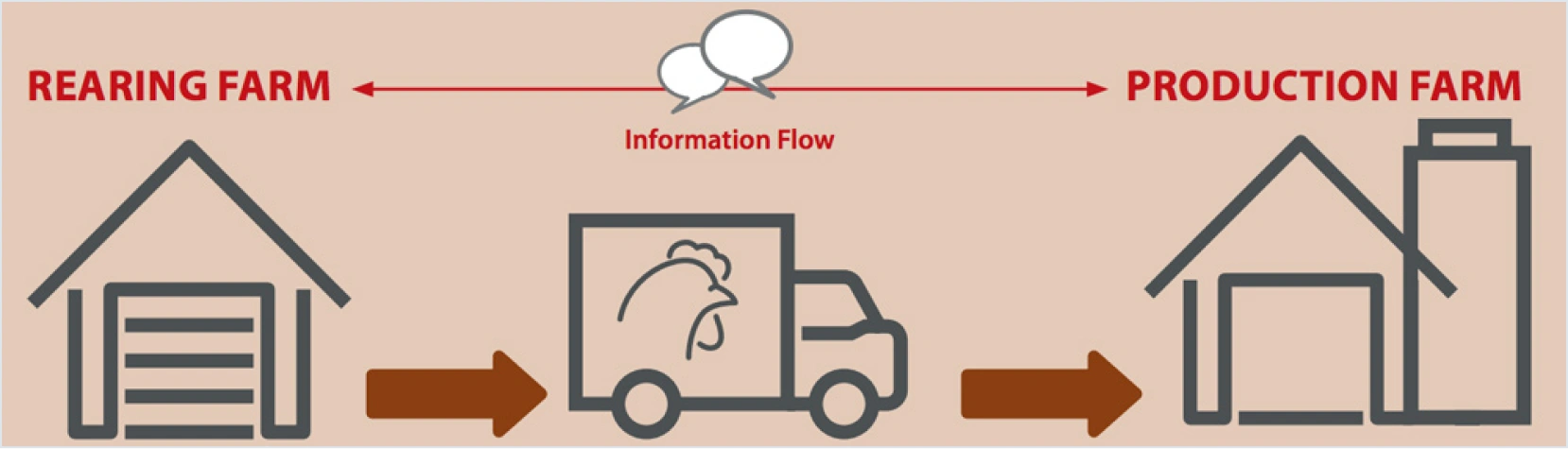
Catching
- Low light intensity
- Trained staff
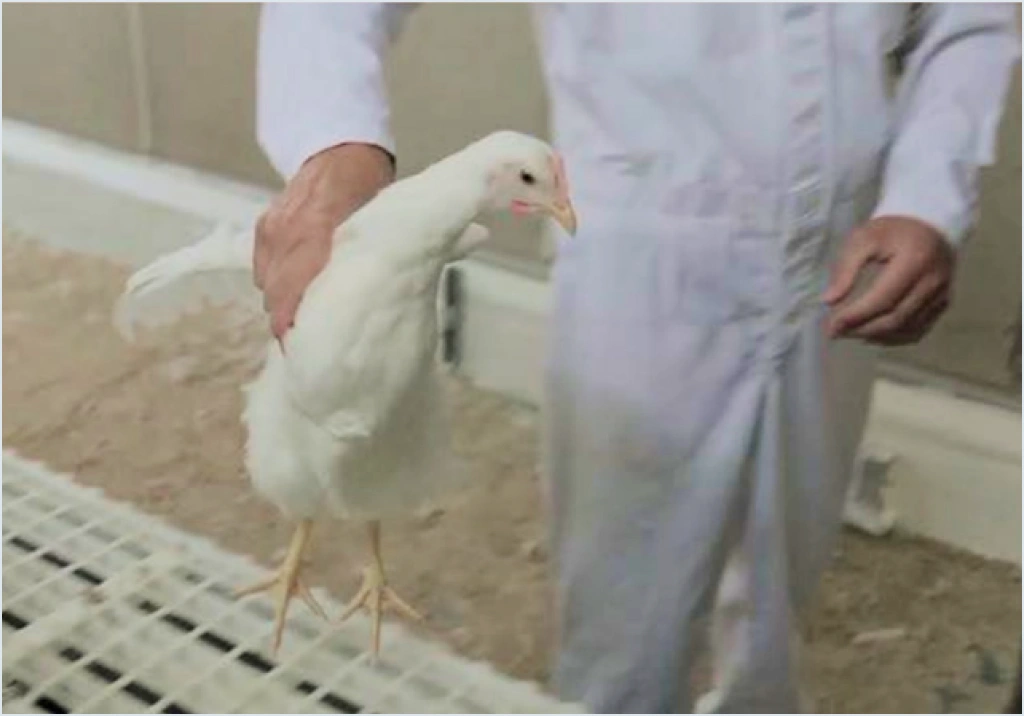
- Careful bird handling
- Gently but quickly
Transport
- Skilled Driver
- Clean and disinfected transport
- Optimum stocking density
- Meeting current local regulations
Reception
- Clean and disinfected
- Equipment properly working
- Water and feed available
- 24h light first day
Preparation
Loading
Important
- Load females and male breeders separate from each other (see male’s management chapter for more details).
- Select any defective or unthrifty birds, and also birds that get into poor condition (males/females).
- Remove all the remaining sexing errors at this time. Sexing errors that remain in the flock will impair the genetic potential of resulting commercial stock. In addition, sexing and color sexing accuracy of commercial chicks will be adversely affected.
Transport
Transport time should be as short as possible, avoiding unnecessary stops. Avoid moving the birds during the part of the day with more extreme temperatures, or when climate conditions could have a negative effect on the birds.
In all cases:
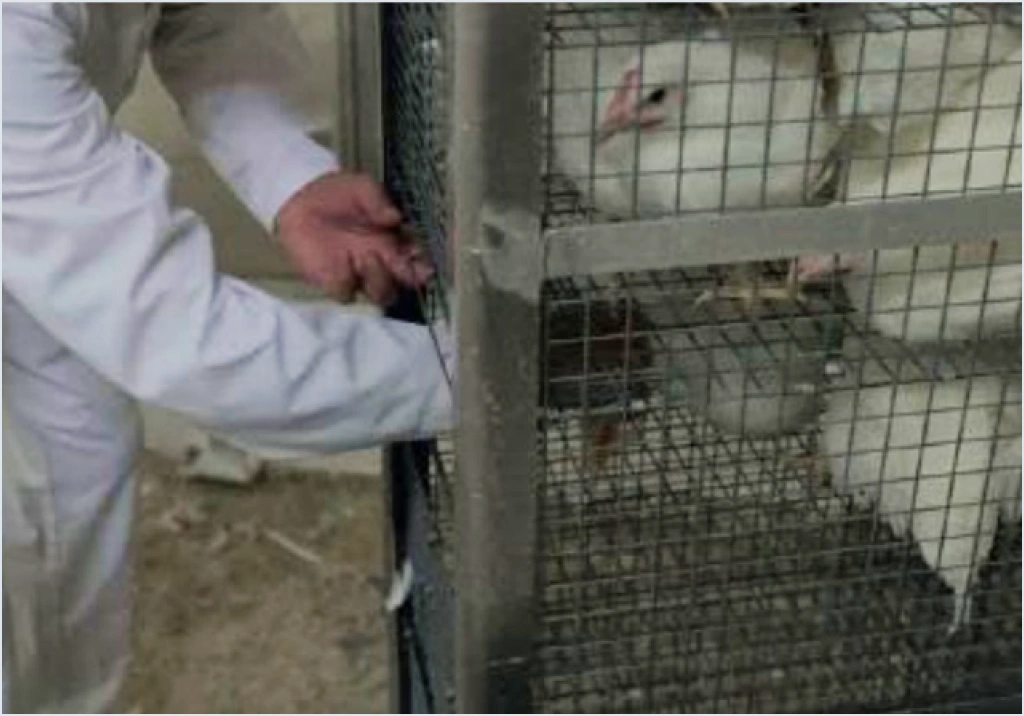
- Do not catch hens by one wing or one leg or the neck.
- Do not overstock transport trolleys.
- Do not leave hens in trolleys in sunlight or unventilated areas.
- Do not load trolleys in closed and unventilated trailers.
Hens will lose some weight during the transport depending on the duration and the temperature. This loss will be quickly recovered if the housing conditions are correct.
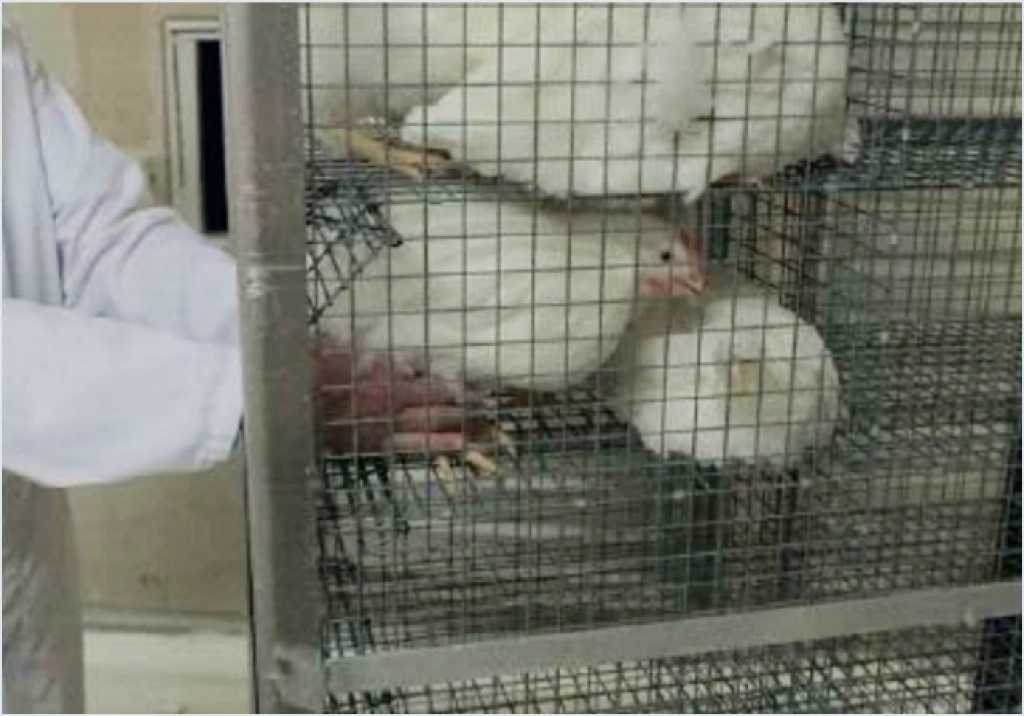

Housing in the laying house
Applying an “all-in all-out” system is recommended to break disease cycles and improve the health status. The laying house should have been thoroughly cleaned and disinfected in advance. The transfer should be done as smoothly and quickly as possible to allow the birds to be well prepared for the start of laying. The temperature in the laying house should be between 18 and 24 °C. Cool water and feed must be available when the pullets arrive at the house.
Water
Feed
Light
Weight
Behavior
Keep in mind:
- In floor houses and aviaries, always check that the number of males per partition is the adequate.
- In family cages, after completing the unloading always check the number of males and females per cage.
- No vaccinations during transfer when possible.

Make a plan for a good distribution of the breeders in each cage, or in barn/aviary in every compartment and place the right numbers of males to keep the normal male/ female ratio. Accommodate (separate) the extra males in a pen/cages as soon as possible. This is to avoid possible aggressive behavior from males to females!
During housing is the last time to make a good selection of males and discards the ones with poor quality. When you have experienced male’s aggression in the past a recommendation in barn/aviary systems is to start with 3–4 % males. After 5–7 days, you can slowly bring in the additional males step by step during the night. Bring in 2 % males every week until you reach the right numbers of males. Do this during the night to avoid stress in the flock.
Having perches in the production house, help to reduce the social stress and the aggression on females. Always is better to divide the house in compartments and place equally number of breeders per section. When well managed, this help to improve male:female behavior better
feed distribution and less dirty eggs.

Bad distribution:
Males are too dominant and aggressive towards females.
- too high male/female ratio
- too much difference in body weight
- males sexually matured earlier than females

Well maintained nests are critical for a good start.
Be sure that litter material is there in time the breeders start using the litter area in barn/ aviary houses.
Different materials may be used:
- Wood shavings
- Cellulose pellets
- Coarse wood shavings
Regardless of the litter material used, it should be hygienic! A litter level depth of 1–2 cm is sufficient. Litter material should preferably be distributed after the house is pre-heated, and when the breeders have been housed. This prevents the formation of condensed water between the floor and litter. Keep the level of litter low and dry during whole production period!

Key points
- Transfer the birds at least two weeks before the onset of lay (no later than 18 weeks).
- Only transfer flocks that are healthy and in good condition.
- Plan transport in advance and organize it well to ensure optimal comfort for the birds and biosecurity.
- Avoid transferring flocks during high temperatures. Transport by night if necessary.
- Monitor the body weight before and for the weeks after transfer to guarantee that the flock is developing correctly.
- Closely monitor water and feed consumption during the weeks after arrival at the laying house.