Heat loss occurs due to the movement of the air which permits the transfer of heat from the hen’s body to the air. This process can be promoted by providing fast air movement around the hen.
Conduction
Heat transfer from surface to surface. Normally, it is relatively unimportant as the contact surface is small and the temperature of the litter or of the cage is not significantly different from the body temperature.
Radiation
This is the transmission of heat from a warm object to a cold one. Heat loss is proportional to the temperature difference between the body surface and the surrounding air.
Evaporation
Birds use evaporation to stabilize their body temperature by increasing the respiration rate through panting, which is very effective.
Effect of the room temperature on the different ways of losing heat
Temperature
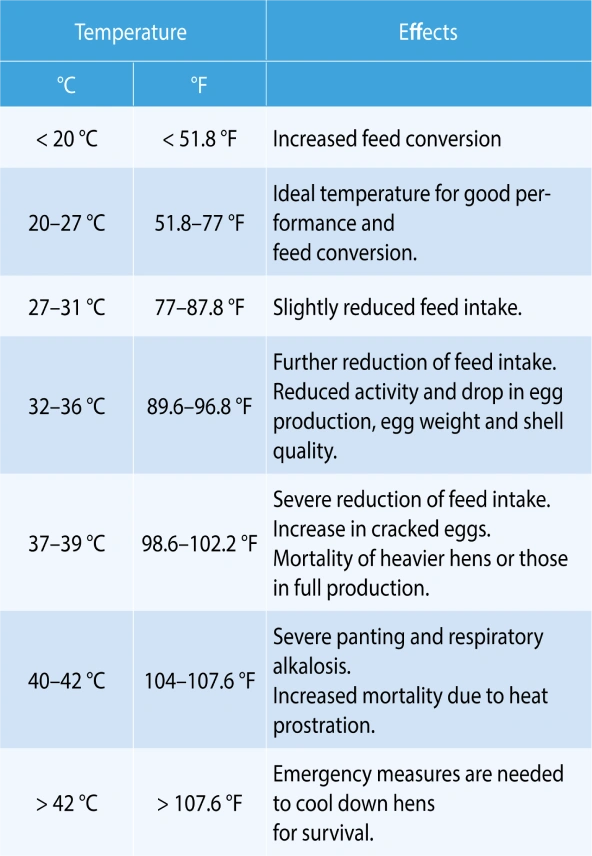
The ambient temperature has a great influence on egg production. Layers perform well over a wide range of temperatures. Temperature fluctuations between 21 °C and 27 °C (69.8 °F and 80.6 °F) have a minimal effect on egg production, egg size and shell quality. Feed conversion improves with higher house temperatures, and maximum efficiency is attained in the 21 – 27 °C (69.8 – 80.6 °F) range. As the temperature rises, however, the following parameters could be affected:
Feed intake
Egg weight
Egg production
Eggshell quality
Mortality
A uniform temperature throughout the house is very important. Good ventilation management and thermal insulation should help to reduce or eliminate temperature variations, specially between day and night.
The temperature should not be seen as an isolated parameter but always considered in combination with humidity. In addition, air speed is also an important element of the perceived ambient temperature.
Table 27. Temperature and its effect on the birds
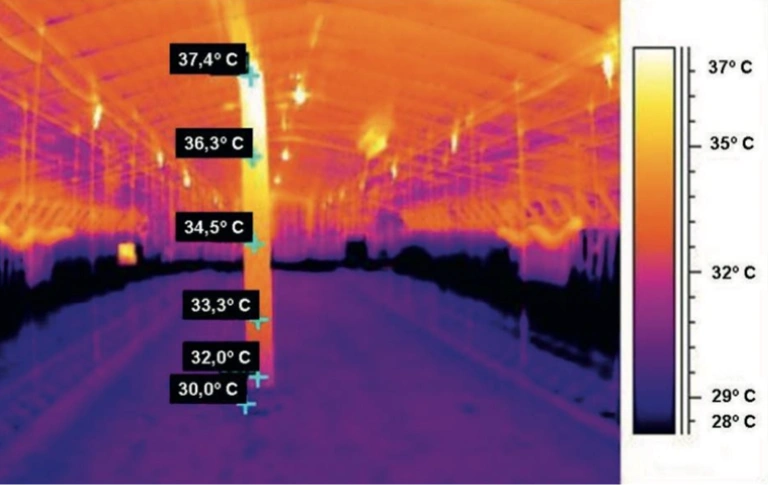
Temperature always has a height gradient. Careful consideration should be taken in cage systems. Courtesy of M.Czarick - UGA
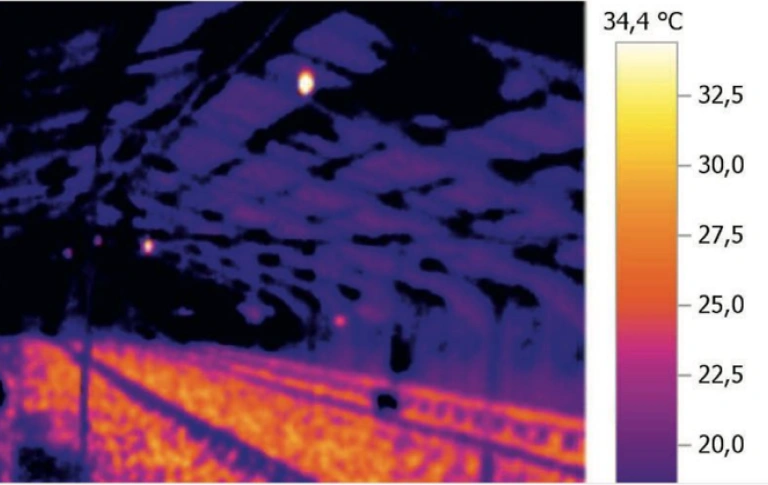
Roof insulation is the corner stone for a correct house temperature and ventilation in hot or cold weather. Courtesy of M. Czarick - UGA
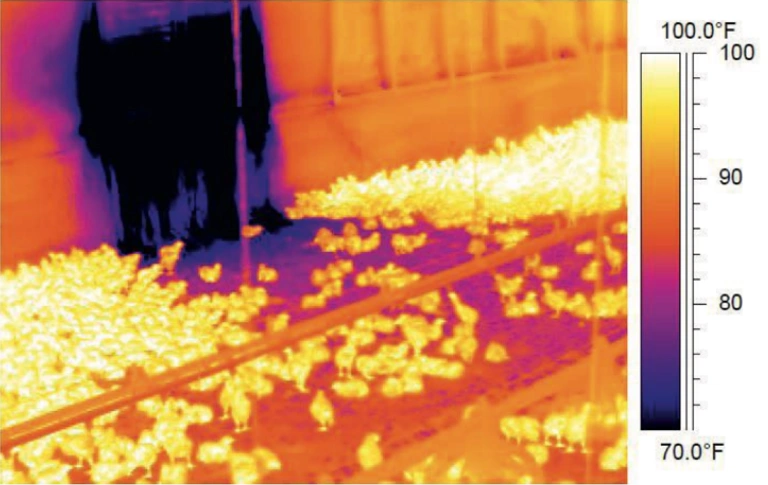
Fans or windows do not have the same insulation capacity as the walls. They can create uncomfortable areas for the birds. Courtesy of M. Czarick - UGA
Hot climate
High temperatures, especially over a long period, can cause serious losses to the poultry farmer. The effects of heat stress are delayed onset of lay, lower performance, decreased feed intake and increased mortality. Therefore, to minimize financial losses, every effort should be made to maintain an ambient temperature in the house that is within the bird’s comfort zone. If this is not possible, corrective measures should be taken:
Ventilation
The ventilation system should be checked before the hot weather arrives. Fans should be cleaned and fan belts should be tightened and replaced if necessary. The inlets must be adequate to supply the airflow needed; they should be clean and not obstruct the flow of the incoming air. Tunnel ventilation and cooling pads are the preferred ventilation system. It is advised to check and update the climate computer, fans, inlets and sensors every year.
Low stocking density
The stocking density should be in accordance with the environmental conditions. If the housing density is too high, the radiant heat between the birds will accumulate, the temperature will increase and air will be prevented from circulating around the birds properly. There should be enough space for the birds to separate in order to pant and droop and slightly lift their wings away from the body to maximize heat loss.
Quality water
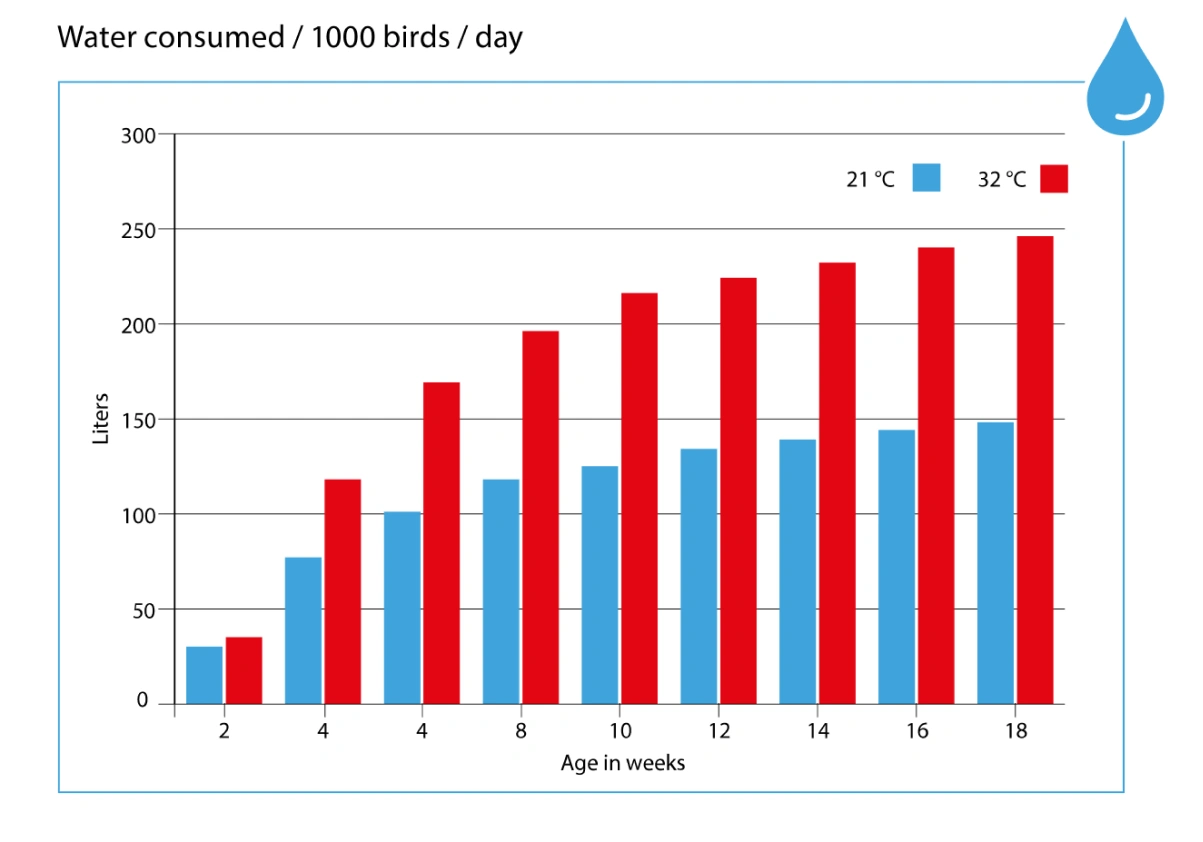
When birds are heat stressed, they increase their consumption of water in an effort to cool down. The ratio of water to feed increases from 2:1 under normal conditions to over 5:1 under hot conditions. Cool water of good quality should be supplied so that birds can find relief from the heat. To ensure that all the birds have access to water, provide a minimum of one cup or nipple drinker at the cage partition or 2.5 cm of water trough per bird.
Feeding times
Do not feed at the hottest time of the day. A good strategy is to withhold feed five to eight hours prior to the anticipated time of peak temperature. Feeder chains should be run frequently to stimulate feed intake. The feeder should remain at a low feed level for about one hour per day in the afternoon, to promote a better appetite and ensure that the fine particles are consumed, which usually consist of minerals, vitamins and amino acids. To increase feed consumption, a midnight snack can be implemented.
Feed formulation
Since feed intake is reduced during hot weather periods, the general feeding approach is to increase the energy content in the feed to keep daily energy intake at the level necessary for optimum performance under these conditions.
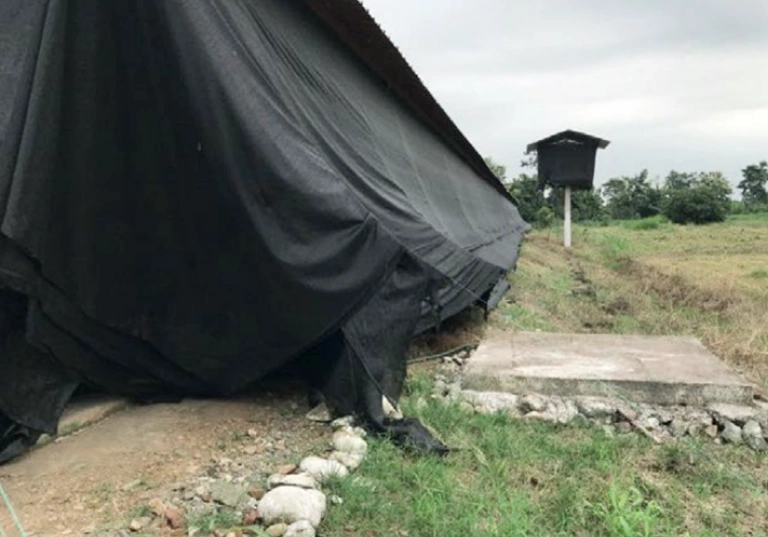
Shades in open houses
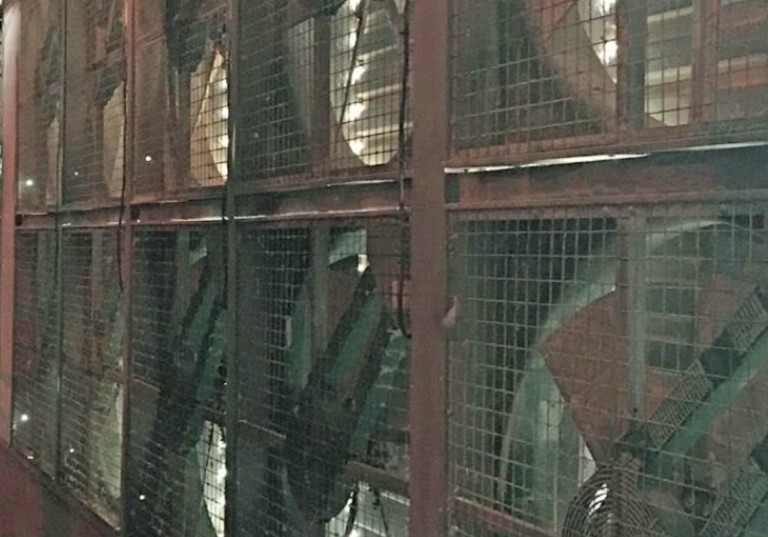
Fans
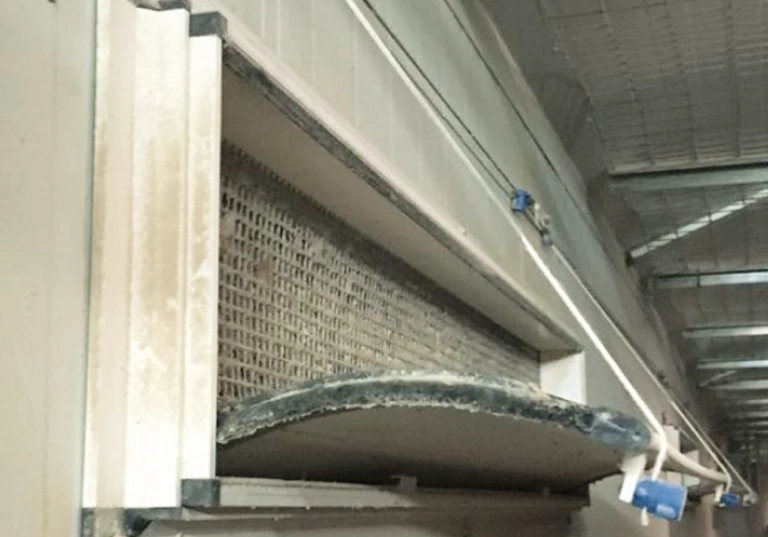
Inlets
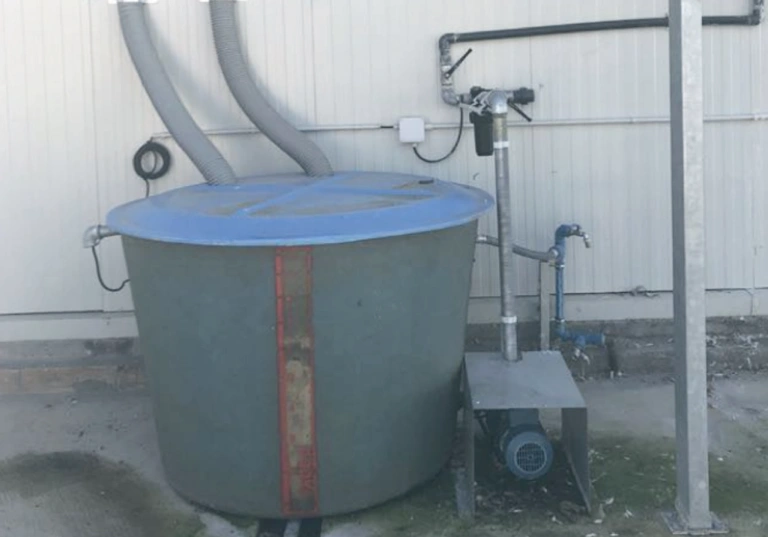
Water reservoir
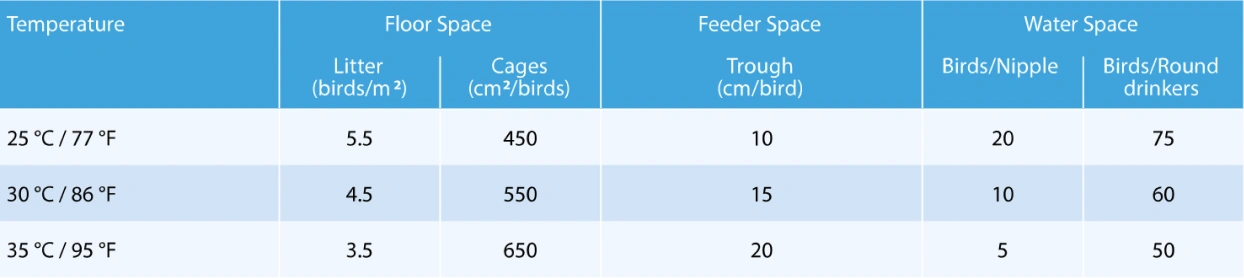
Table 28. Stocking density in hot climate Always adhere to your own legislative requirements
Water quality
Water is the most important and critical nutrient for hens. Any water deprivation will directly impact feed consumption and production. If deprivation exceeds 24 hours, egg production will be severely affected. If deprivation exceeds 48 hours, high mortality will occur in the flock. It is therefore essential to provide a good quality, stable and reliable source of water. Better still, ensure there are two water sources.
Microbiological quality
Water can act as a disease carrier if it is contaminated at the source. Moreover, a poor microbiological quality of water can affect gut health and lead to pathologic issues that affect production. The microbiological quality at the water source should be monitored and samples should be taken at least once per year. This is even more important if water comes from surface sources. Even if the water source is of excellent quality, chlorination or an alternative treatment is highly recommended. Treatment of surface water is compulsory.
Physical quality
The content of minerals and other elements can greatly impact egg production and hen health. Even if corrective measures can be taken, it is very difficult and expensive to alter the chemical characteristics of water. A good quality water source is a huge advantage when a new farm is under construction. The physical and chemical water quality must be monitored and samples taken at least every year.
Refusing water
In some cases, hens can refuse water. This situation is the same as water privation:
Temperature: hens will decrease their water consumption when water is above 24° C, but will refuse it above 32 °C
Taste: hens do not have a very developed sense of taste but will refuse to drink water with a unpleasant taste. Some water additives or antibiotics can produce this effect.
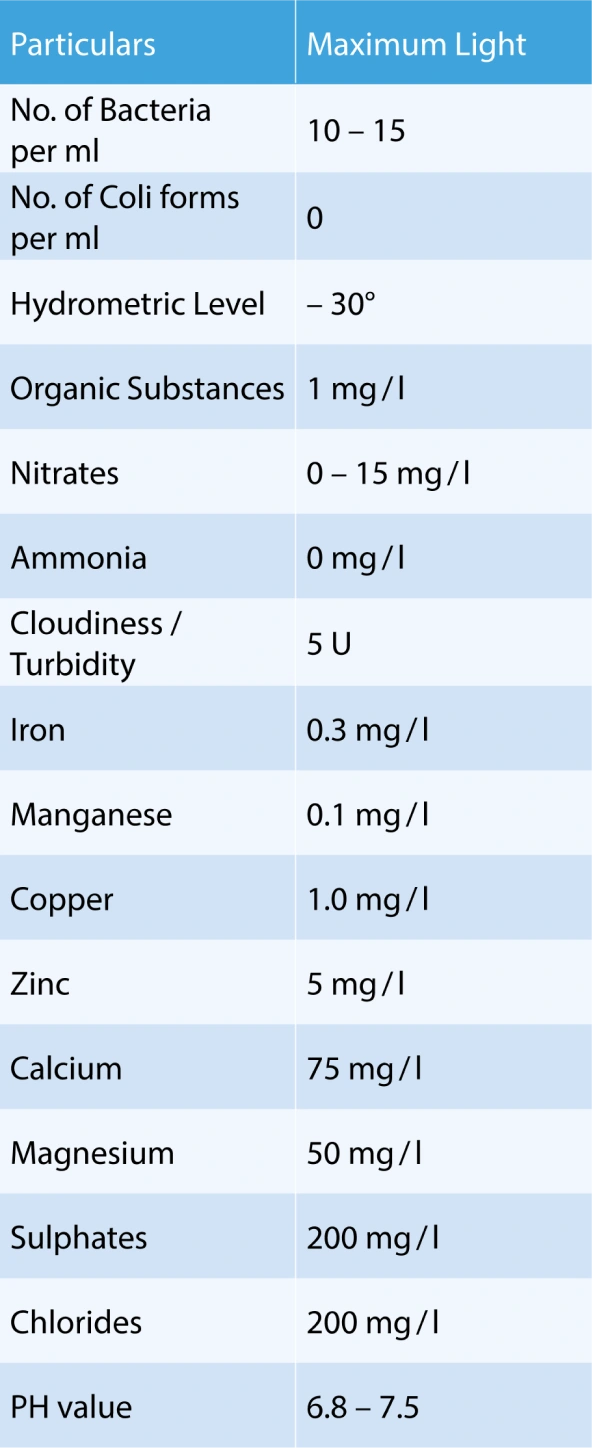
Table 29. Drinking water parameters
Water consumed / 1000 brids / day
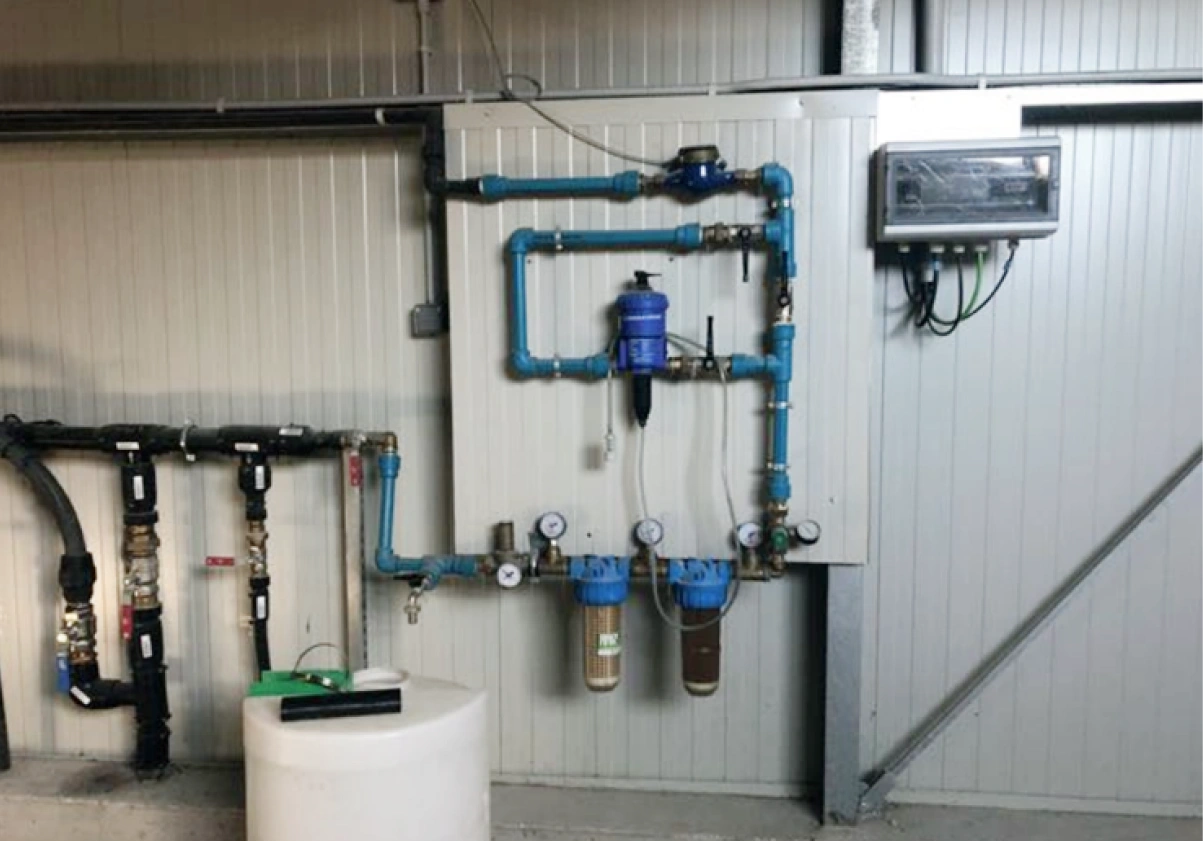
Water chlorination station
Air quality
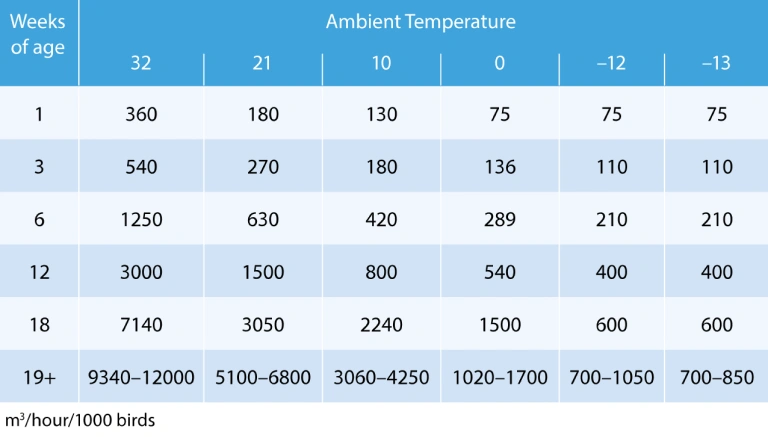
Good air quality should be guaranteed in the house by using proper ventilation, so there is a low concentration of gases and dust. At the same time, the temperature in the house should be optimally maintained between 18 – 20 °C with a relative humidity of 50 – 60 %. The rate of ventilation is determined by the temperature; however, when this parameter is reached a minimum ventilation level must be guaranteed. This minimum is normally calculated in m2/body weight/hour, but the real aim is the correct management of these parameters:
Relative humidity
CO2 less than 5000 ppm
CO less than 50 ppm
NH3 less than 25 ppm
Table 30. Air Movement
Light
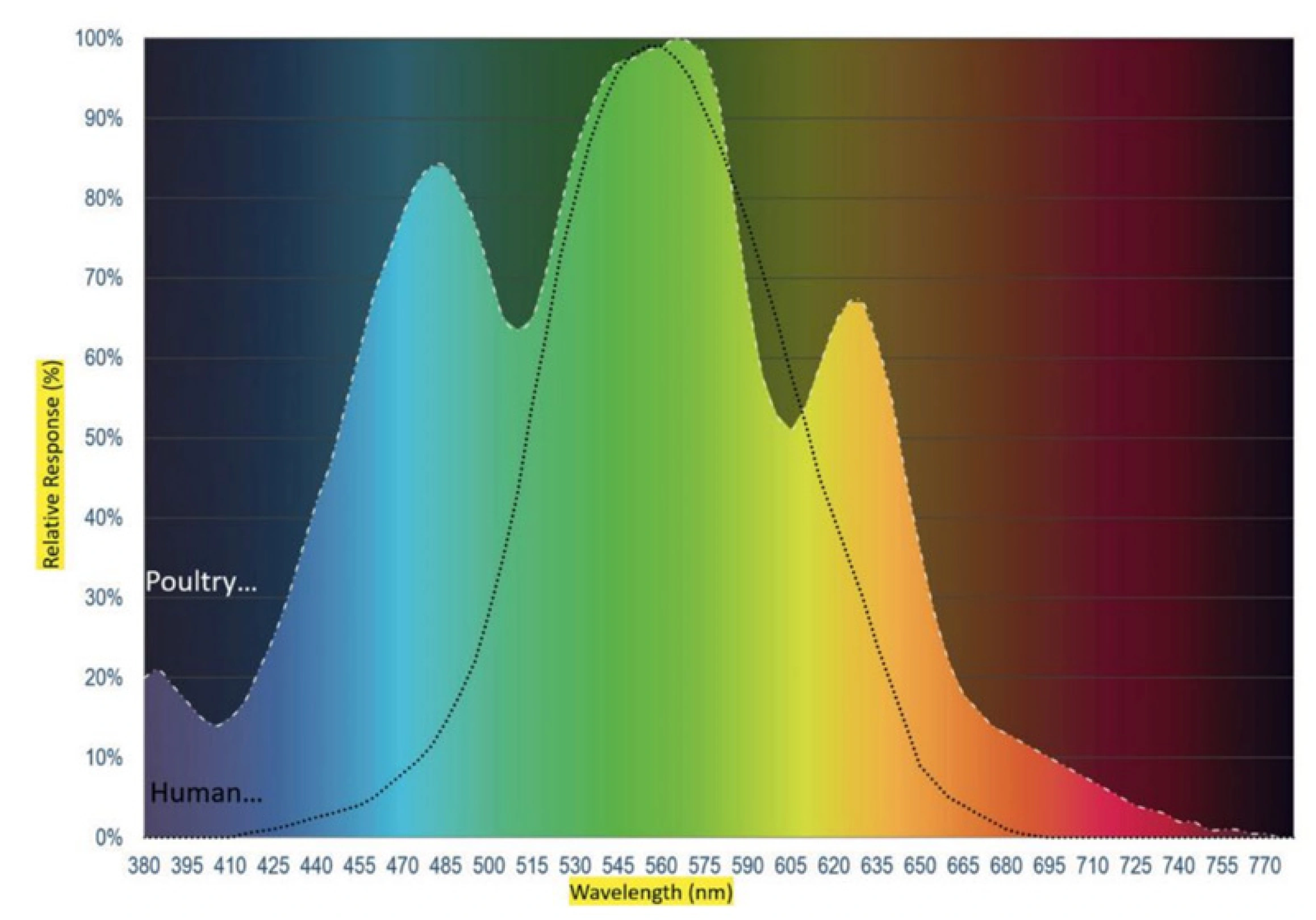
Birds vision differs from that of humans in vision spectra. Hens can see ultraviolet and infrared light. This fact should be considered when creating light programs and choosing the light color. Hens need proper light with an adequate light intensity and the correct photoperiod. The best source of light for production is a high frequency (> 2,000 Hz) bulb emitting light within the warm color spectrum (2,500-3,500 K).
Low frequency fluorescent tubes or energy saving bulbs (50-100 Hz) have a strobe light effect on hens and encourage feather pecking and cannibalism. In addition, hens can see perfectly in a low light intensity environment. Light intensity will vary during the different production stages, but keep in mind that the higher the light intensity, the more active the hens will be. It can be positive (as in the case of brooding) or negative (as in the case of cannibalism during laying). In any case, light intensity variation during the day should be avoided as it can cause high stress levels in the hens. Direct sunlight should also be avoided for the same reason.